
Russia’s War on Ukraine: Witnessing the Destruction of Living Worlds
CEMES ANNUAL KEYNOTE with Darya Tsymbalyuk, University of Chicago
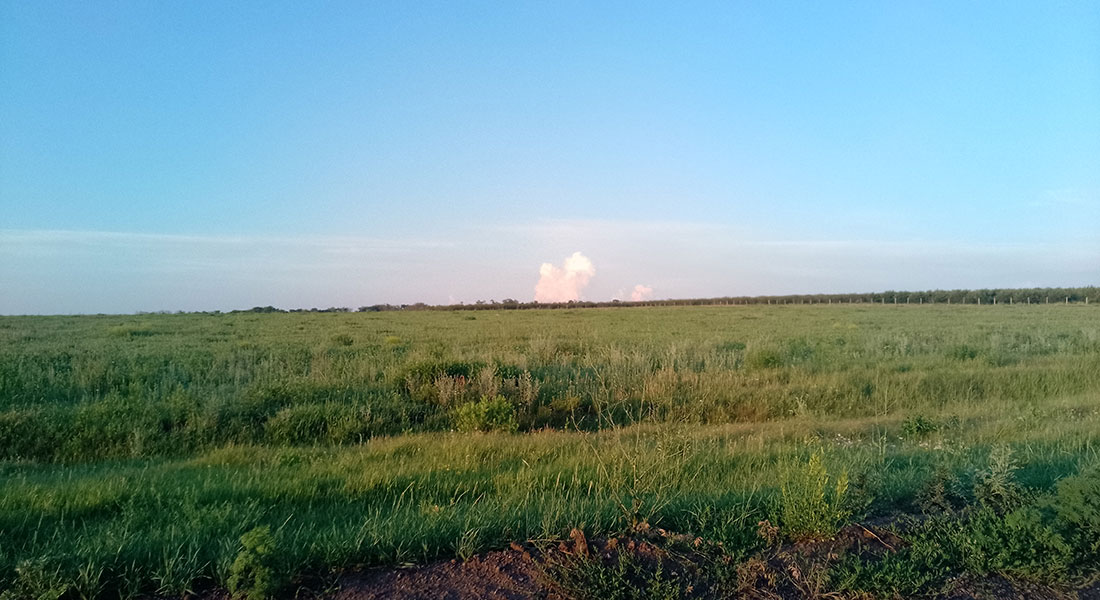
In this talk, I take my book “Ecocide in Ukraine: The Environmental Cost of Russia’s War” as a departure point to reflect on the destruction of environments as the destruction of living worlds. In the logic of sacrifice zones separation occurs when places are seen as already lost, hence it is urgent to attend to the forms of life lived and living, especially now, in this moment of resistance against invasion, occupation and destruction.
Thinking about the living worlds invites us to foreground those who inhabit(ed) the worlds under attack, including people, plants, animals, but also rivers, soils and seashores. Finally, I trace meanings and points of connection that constitute the tissue of life, life which has deliberately been the primary target of relentless attacks by Russian missiles and UAVs.
I ask: in this moment of existential threat, how does the war impact one’s relations to forests, shelterbelts, underground passages, skies? How does our understanding of Ukraine change when we think of it as a multiplicity of living endangered worlds? And what has already been lost and still will be lost for as long as Russian war machine continues its increasingly deadlier devastation?
Bio
Darya Tsymbalyuk is an Assistant Professor at the Department of Slavic Languages and Literatures and the Committee on Environment, Geography and Urbanization (CEGU) at the University of Chicago.
She is an interdisciplinary scholar working at the intersection of environmental humanities and artistic research, and her practice includes writing and image-making. Tsymbalyuk is the author of “Ecocide in Ukraine: The Environmental Cost of Russia's War” (Polity 2025) which received the 2026 Humanities Institute Book Award from Arizona State University, the 2026 American Association for Ukrainian Studies Award, and the 2025 UNWLA Kovaliv Prize in nonfiction/history.
Map of South Campus
View directions.
View on map of the Faculty of Humanities - South Campus.
View map of South Campus (pdf).